
THE ESSENTIAL GUIDE
How to monitor a domain without losing the context
Following a name is easy. Knowing which changes matter takes a little more context. Build a monitoring routine that connects an observation to your next decision.
Start readingTHE TRACKDOM JOURNAL
Practical guides to tracking domains, understanding their value and knowing what to check before you act.
Browse guidesTHE ESSENTIAL GUIDE
Following a name is easy. Knowing which changes matter takes a little more context. Build a monitoring routine that connects an observation to your next decision.
Start reading4 guides
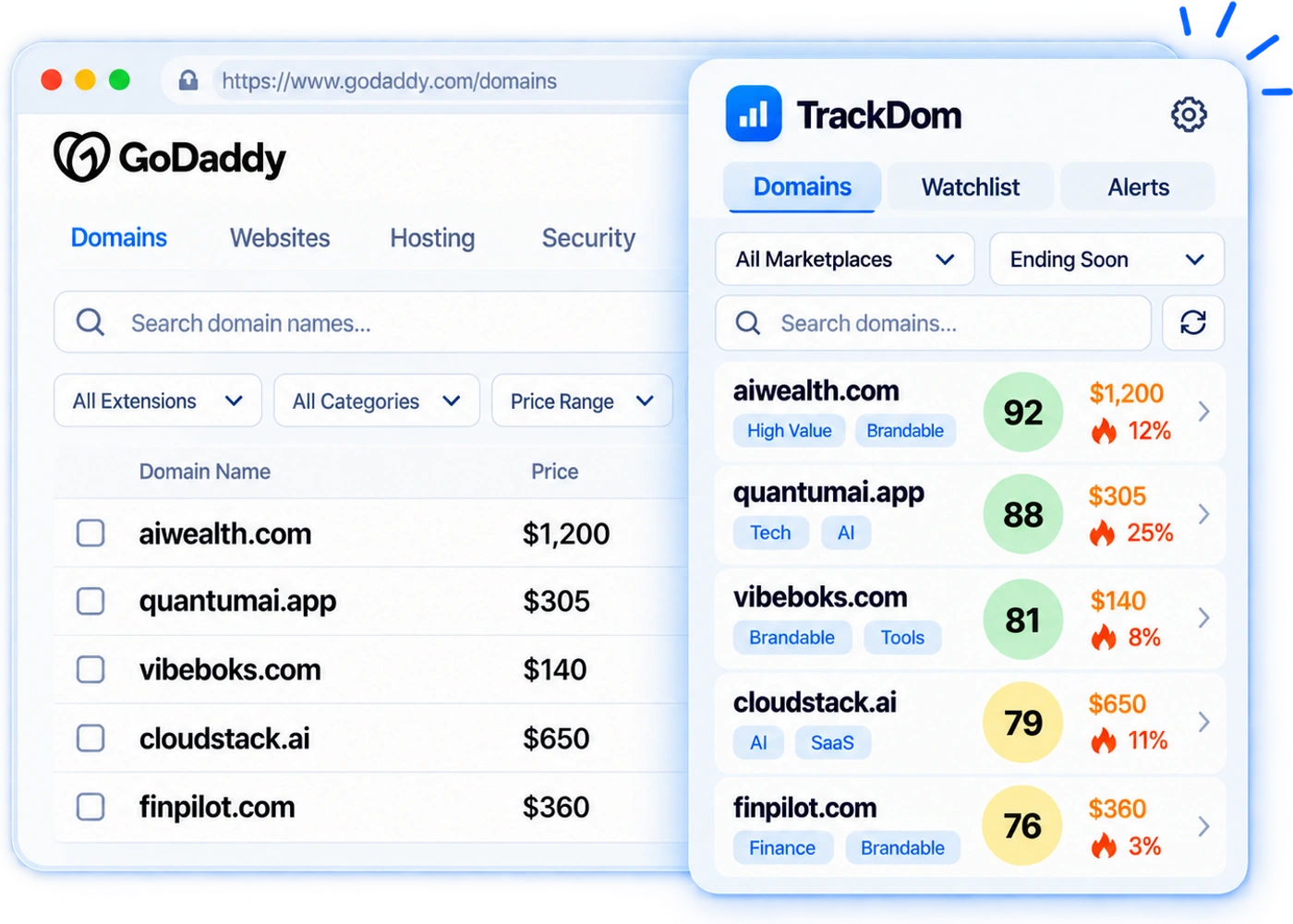
A practical guide to domain monitoring: choose the changes that matter, keep a reliable baseline and verify alerts before you act.
Read the guide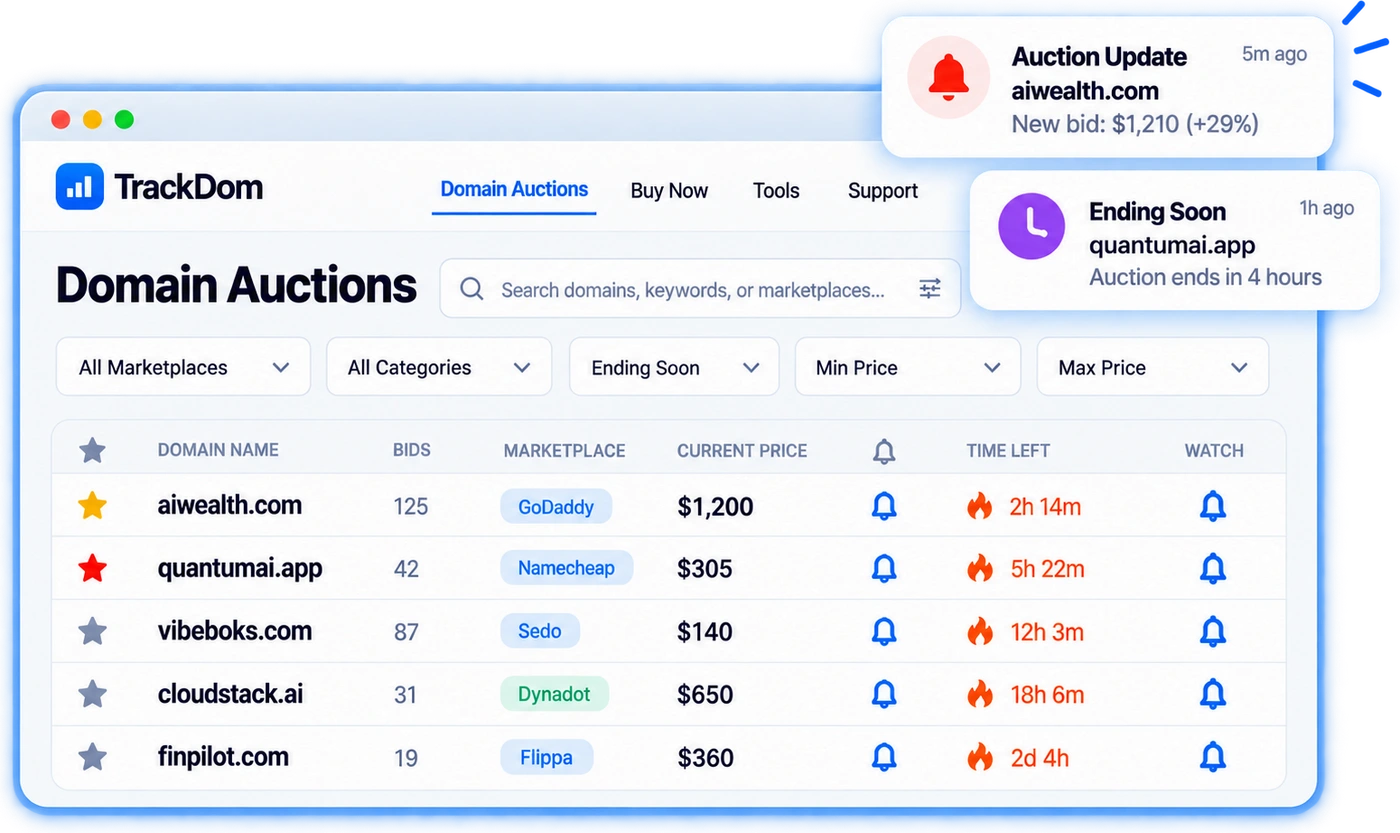
Review a domain auction with a clear checklist for listing type, costs, deadlines, domain history and the steps after bidding ends.
Read the guideUnderstand domain valuation estimates, comparable sales, buyer fit and carrying costs before turning an attractive number into a purchase decision.
Read the guide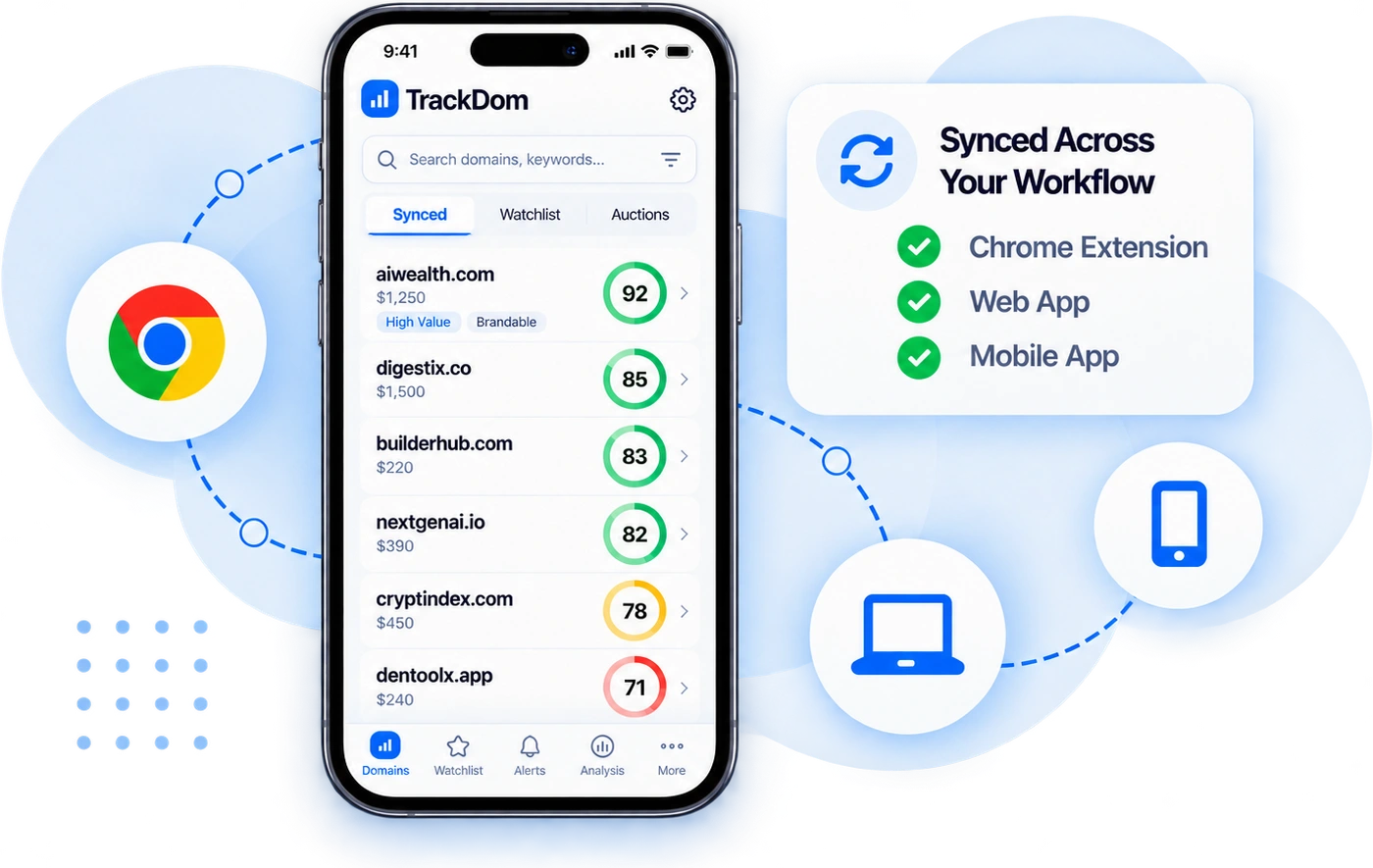
Turn saved domains into a focused research workflow with clear criteria, review dates, source links and a practical decision log.
Read the guideTo research a domain, define its intended use, save a dated source, verify the facts that could change your decision and choose a clear next action. Keep observations separate from estimates. Recheck the original listing before bidding or buying.
Decide what you need the domain for before collecting more names. A product launch, an auction review and a long-term acquisition shortlist have different requirements. Write one sentence about the intended use, the audience and the constraint that matters most.
A focused question creates a better research session. “Which name can people spell after hearing it?” leads to a practical comparison. “Which domain is best?” invites an endless search with no clear stopping point.
Go deeperRecord the exact domain, the source URL and when you checked it. Label prices as asking prices, current bids or estimates. Keep the currency and listing type visible. This turns a number on a screen into an observation you can verify later.
A baseline is especially useful when the same name appears on several marketplaces. Differences may come from sale format, currency or freshness. Keep the records separate until you understand the discrepancy instead of merging them into a single “current value.”
Go deeperResearch the fact that could change your decision: the total cost, the renewal terms, the name’s suitability or the auction rules. Use direct sources where possible. A score can help you sort a shortlist, but the explanation and evidence should determine what you investigate.
Write down what you do not know. Missing information is easier to resolve when it has a name. An unresolved cost or an unclear sale condition should remain visible in the record rather than being replaced by an optimistic assumption.
Go deeperFinish with a specific outcome: continue watching, verify a named question, pursue the domain within your limits or archive it. Keep the reason beside the decision. A research session should leave you with a clearer next step, even when that step is to pass.
For time-sensitive auctions, verify the listing on its original marketplace before acting. For names you already own, manage renewal through the registrar. A research workflow can improve organization, but it does not replace the account and transaction controls that matter at the source.
Go deeperUseful for comparing current listings. It does not show that a buyer has accepted the price. Check the sale format and currency before comparing it with another listing.
Useful for following auction movement. It can change before the auction closes and may exclude other costs. Confirm the latest state on the marketplace.
Useful as an additional reference. Its assumptions, coverage and evidence matter. It is not a purchase offer or a guaranteed result.
Useful as a possible comparable when the context is known. Check what was sold, when, in which currency and how similar the domain is.
Use these questions to keep a domain review focused. An unanswered question is something to investigate before you commit.
Get the full auction checklistRegistration terminology: ICANN status code definitions and ICANN Lookup. Marketplace terminology should always be checked against the platform’s current terms.
QUESTIONS FROM THE RESEARCH DESK
Direct answers to the questions that come up when you start following domains.
Ask TrackDom a questionDomain tracking follows information about a domain or its marketplace listing, such as an observed price or auction status. Website monitoring usually checks whether a site or service is working. Registrar renewal controls are another separate function. Choose the type of monitoring that matches the problem you are trying to solve.
Read the related guideConfirm the exact spelling and extension, identify the sale method, check the original listing and calculate the costs you can verify. Review the name’s practical use and available history, then record any unresolved questions. Set your own spending limit before taking part in an auction or negotiation.
Read the related guideAn appraisal is one research input. Its usefulness depends on the method, data and assumptions behind it. Review the name’s actual use, suitable completed sales, costs and alternatives as well. A precise estimate does not establish a buyer, a sale price or a time to sell.
Read the related guideNo. Renewal and recovery processes can apply after expiration, and policies depend on the domain extension, registry and registrar. Keep a registration date separate from an auction deadline. Read the registrar’s current terms and the relevant registration status before drawing a conclusion about availability.
Read the related guideOpen the original listing and check the amount, currency, sale format and observation time. Review whether the full cost now fits your purpose and budget. A price change is a reason to reassess your research, not an instruction to buy.
Read the related guideTrackDom is a domain research and tracking product. It does not automatically bid on or buy domains. Use the marketplace’s own process for a transaction, and verify the current product pages for supported monitoring sources and plan allowances.
Read the related guideTrackDom publishes practical product and domain-research education. We link to primary sources for registration rules and marketplace procedures, distinguish examples from observed data and explain uncertainty rather than promising outcomes. Our workflows are suggested research methods, not a claim that every step is an automated product feature.
These guides were prepared on . Rules and product availability can change; check the linked source and the current product details before relying on a specific process. Found an unclear explanation? Tell us what needs a closer look.
Explore how TrackDom brings domain research, watchlists and supported monitoring into one workflow.