How to evaluate a domain beyond the appraisal number
Understand domain valuation estimates, comparable sales, buyer fit and carrying costs before turning an attractive number into a purchase decision.

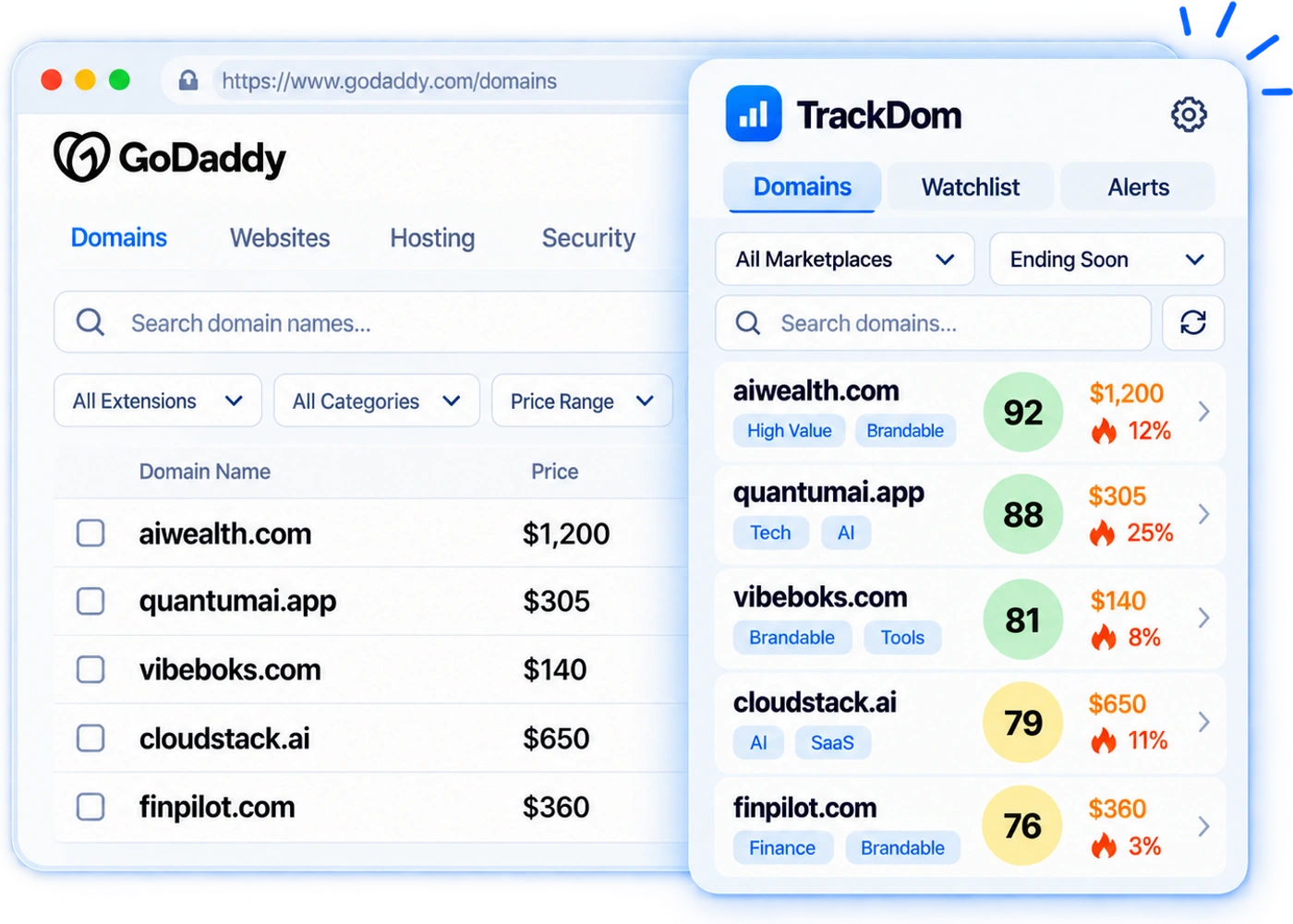
Illustrative product interface. Names, scores and prices are examples.
Evaluate a domain by combining its practical use, wording, extension, relevant completed sales, acquisition costs and ownership costs. Automated appraisals can provide another reference point, but they are estimates rather than offers. Keep your evaluation range separate from the maximum you are willing to spend.
Why can the same domain have several different prices?
An asking price describes what a seller requests. A current bid describes the state of an auction. An appraisal estimates a value using a model or method. A completed sale records a specific transaction. These figures can all appear beside the same name, but they answer different questions.
Start a valuation note by labeling every number. Include the source, date and currency. If a number has no clear definition, do not let its precision make it look more reliable than it is. A detailed estimate with no suitable buyer is still an estimate. A low bid in an unfinished auction is still an unfinished bid.
GoDaddy describes GoValue as a machine-learned valuation and distinguishes estimated resale value from registration pricing. That distinction is useful even when you use another tool: the cost to register or renew a name is not a calculation of the price another person will eventually pay for it.
Begin with the person who could use the name
Describe a realistic use before looking for a large valuation. A founder choosing a product name may care about clarity, pronunciation and the ability to explain the name aloud. A domain investor may consider the range of plausible buyers, how specific the wording is and how long they can afford to wait.
Write a buyer hypothesis that another person can challenge. “A memorable name for a local booking service” is easier to investigate than “a premium brand with huge potential.” Then ask whether that use depends on the exact domain, whether reasonable alternatives exist and whether the extension suits the intended audience.
This exercise does not prove demand. A list of companies that could theoretically use a name is not evidence that those companies want to buy it. Keep possible uses separate from actual inquiries or offers. If your thesis relies on one particular organization acquiring the name, record that concentration as a weakness rather than treating it as broad market demand.
Evaluate wording, spelling and extension together
Read the name aloud and ask someone else to type it without seeing it. Notice ambiguity, repeated letters, hyphens, alternate spellings and unintended meanings. A short name can still be difficult to communicate. A longer descriptive name can be useful for a specific project. Judge the friction in the context of the buyer’s actual use.
Consider the extension as part of the whole name. Check the renewal price and any registry-specific conditions before assuming an inexpensive first year makes ownership inexpensive. Different names and extensions can have different economics. Verify current costs with the registrar rather than relying on a general price example.
Separate naming preferences from evidence. You may personally like a word combination while lacking evidence of buyer interest. Record both honestly. A useful evaluation should make it possible to understand why a name fits a particular purpose without asking the reader to share your taste.
- Can someone hear the name once and spell it?
- Does the wording communicate the intended idea?
- Does the extension fit the audience and use?
- Are renewal costs and any conditions clear?
- Which alternatives could serve the same purpose?
- What evidence would weaken your buyer hypothesis?
How should you use comparable domain sales?
A comparable sale is a reference point, not a formula. Look for a completed transaction with a similar extension, word structure and plausible use. A one-word consumer brand is a weak comparison for a technical three-word phrase simply because both names contain a fashionable term.
For each reference, record the reported sale date, currency, venue and what was sold. Exclude asking prices from a list labeled completed sales. If the transaction included a website or business, it cannot cleanly establish the value of the domain alone. If important details are unavailable, keep that uncertainty visible.
Do not select only the most exciting result. A spectacular sale may reflect a buyer situation that cannot be repeated. A collection of public sales also omits names that never sold. Without the full set of listings and outcomes, it does not establish your probability of selling another name.
| Question | Stronger reference | Weaker reference |
|---|---|---|
| Was it a sale? | A documented completed transaction. | A seller’s current asking price. |
| Is the asset similar? | Domain-only, similar structure and extension. | A business or website sale. |
| Is the use comparable? | A plausible shared audience or naming role. | A shared keyword with unrelated use. |
| Is the context clear? | Date, currency and venue recorded. | An unsourced screenshot of a number. |
Use a range and keep your spending ceiling separate
A range can communicate uncertainty more honestly than a single figure. Write the assumptions behind your lower and upper scenarios: buyer fit, comparable evidence, competition from alternatives and the time you may need to hold the name. If the evidence is thin, say so rather than narrowing the range to look decisive.
Your spending ceiling is a separate decision. It reflects your budget, carrying costs, other opportunities and willingness to tolerate an unsuccessful outcome. Even if you believe a domain could sell for more, you can still decide that its acquisition cost does not fit your situation. A possible future price is not money available to pay today’s bill.
For an illustrative exercise, compare holding a domain for one year with holding it for several years. Add the verified renewal costs in each case, then consider what happens if no buyer appears. Do not insert an invented sale probability to make the calculation attractive. The exercise should expose the cost of waiting, not disguise it.
Where do AI appraisals and domain scores help?
AI summaries can help organize questions about wording, brand fit and possible use. Consistent scoring criteria can help you sort a large shortlist. Neither substitutes for verifying the facts that would determine a purchase. A persuasive explanation may still rest on missing sales data or an unsupported assumption about demand.
Ask what a score measures before comparing domains. An internal opportunity score is not automatically a percentage chance of sale, a cash offer or a guarantee of quality. Keep the score alongside its explanation and the original listing, rather than copying the number into your notes without context.
In TrackDom, review valuation guidance and AI-assisted research as inputs to your own evaluation. Check the product’s current capabilities and the evidence available for the specific domain. When an output raises a useful question, investigate it. When it supplies a claim you cannot verify, preserve it as a hypothesis rather than promoting it to fact.
YOUR NEXT STEP
A defensible valuation explains the assumptions, the evidence and the uncertainty. A large appraisal number alone explains none of them.
Keep your source links and the next question beside the domain you are researching. For available TrackDom features and plan limits, review the current product details.
Published by TrackDom ·
Educational research guidance. Examples do not represent current listings, offers or guaranteed outcomes. Check linked sources for current procedures.
Suggest a correction